

Before I delve into this massive subject, let’s lay a foundation and define what marriage is meant to be.
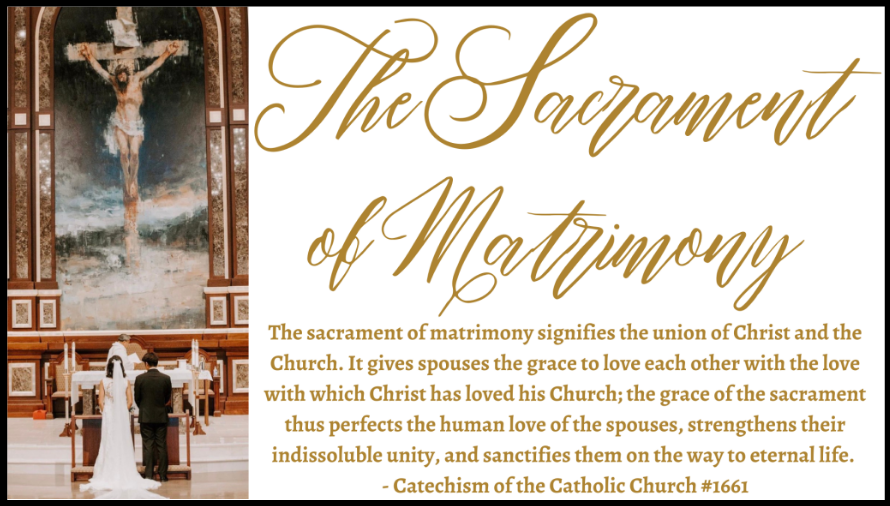
As I have previously mentioned, I was raised Catholic, and in the Catholic tradition, marriage is called Holy Matrimony, and it is considered one of the seven sacraments.
For those who may be unfamiliar with the sacraments, they are rites believed to be a means of divine grace or a sign or symbol and a spiritual reality. For Catholics, marriage is understood as a sacred bond instituted by God. It is a lifelong, exclusive partnership between one man and one woman and meant to guard them from sexual immorality. It is for the procreation and education of children.
This union is considered a covenant and is meant to be a manifestation of the love that Christ has for His Bride, The Church. It is also intended as a source of joy, strength and holiness for the couple and their community.
In the Protestant tradition, marriage is considered a sacred institution initiated by God as demonstrated by the creation of Adam and Eve.
They believe it is similar in all points to the Catholics, with the exception of it being a sacrament. Rather the Protestant tradition emphasizes that it is a covenant, a solemn promise made to God and before God.
Several covenants appear throughout the Bible that God made with both individuals and groups, therefore by using those as examples, we see that God is willing to help His people and provide for His people as they trust Him.
This can be an encouragement for couples as they pledge their forever love to each
other, joining hands before an all-powerful God.
While I prepared for my first marriage – which was in the Catholic church – I was just 19 years old and full of trepidation. My husband’s dad and my step-dad both struggled with alcohol addiction at the time, and we agreed to get married as a way to distance ourselves from them.
This was reason number one, NOT to get married. But wait! There are more.
My boyfriend was handsome with thick dark curly hair. He also had a job, which meant he had money to take me places. Plus, we would ride to all those places in his cool car. What more could a girl ask for? I later learned a critical issue that would follow us to our new home, the over consumption of alcohol. After over fifteen years together, he left me and our two children. As he packed his clothes, he drank four beers within 20 minutes.
Three months later the divorce was final. Even though I believed God could put my family back together, He had a different future in mind for me.
Eight years later God called me to start a Divorce Recovery Ministry at my church, and I was privileged to do so and as I did, I learned much more about marriage and male-female relationships.
Primarily, that your desire for marriage should be to honor God with your relationship.
It should not be to remove you from an uncomfortable situation, or to ride in a cool car or anything physical. While I was single, an older and wiser Christian woman told me,
“Don’t marry anyone until you can do more for Jesus together than you can do by yourself.”
And as God would have it, I did just that in 2001. Twelve years of ministry to the separated, divorced and single parents was a very special time in my life, because not only did God give me the spiritual gifts of Faith and Administration for that ministry, He allowed me to learn so much in the process and provide an avenue to hundreds of hurting people who were seeking hope and healing.
We offered DivorceCare, which was a 13-week video series featuring experts on various topics related to issues surrounding separation and divorce. Then each week we would go into small groups to discuss the video and how the information could help them.
After a few sessions, participants were excited about what they were learning and started asking what else they needed to learn to have a healthy and long-lasting new relationship.
So we started offering additional classes on dating and new relationships.
One of these courses we called, Oneness and we based it on the book by Myles Munroe, Single, Married Separated and Life After Divorce.
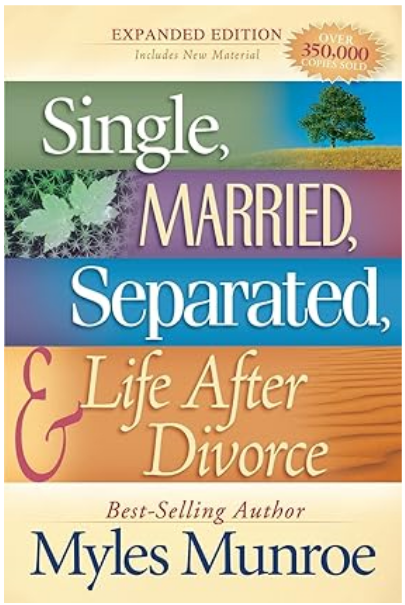
This teaching encouraged individuals to find their identity in Christ first, and to be separate, unique and whole in Him. That is when you are truly ready for a healthy, Christ- honoring relationship.
Leading this ministry focused on relationships and having a passion to serve God, including teaching others what marriage was meant to be, is what motivates me to write about this topic.
In my experience, many who believe they are Christians – Christ followers – are really not.
Again, as I’ve mentioned in previous blogs, there are varying definitions of Christian. A true follower of Christ is someone who actually knows where He (Jesus) is and where He is leading them.
This is someone who reads their Bible regularly and allows the indwelling Holy Spirit to be their Teacher and Counselor.
When you meet those qualifications, THEN you are a Christ-follower.
It’s impossible to follow someone if you don’t know where they want you to go. The Bible gives you the road map.
You can attend church regularly, but if you never open your own Bible during the week, all you take in is the World, the Flesh and the Devil, because that’s where we live, in Satan’s kingdom.
Before my current husband and I married, we participated in not just one, but two pre-marital counseling studies. One we did with a Christian counselor at our church an another we did with a mentoring couple at another church. I cannot emphasize strongly enough, that pre-marital counseling is a MUST. Whether for a first marriage or any marriage beyond that – especially for any marriage other than the first. Because life in the world is compounding.
As life happens, remembering we all start out in Satan’s kingdom, there are many opportunities for bumps and bruises along the way. Maybe your childhood and your dreams were shattered by your own parent’s breakup, problems with alcohol or drugs, any form of abuse, abandonment or difficulty with teachers or peers in school. All this and more affect our perspective on our future, with marriage and family relationships being critical to lifelong happiness.
I will discuss why and how to lay a great foundation for marriage in Part II.
Leave a Reply